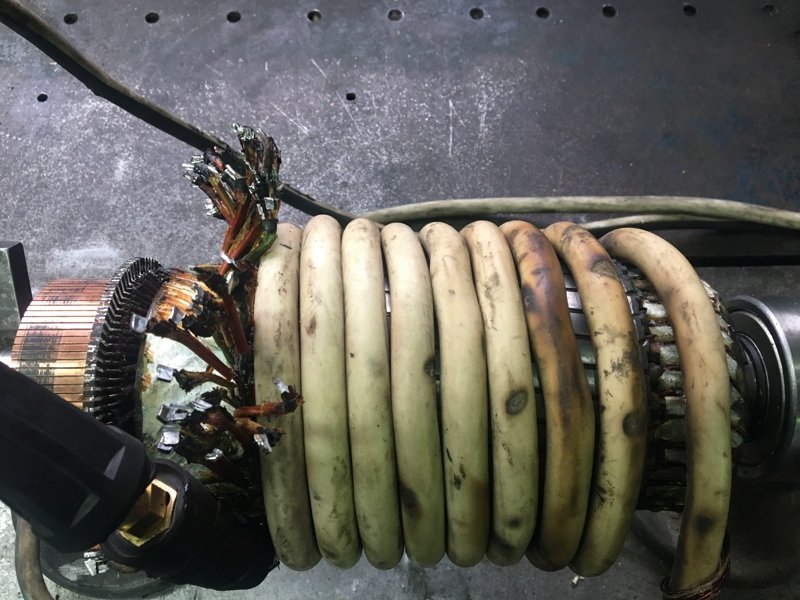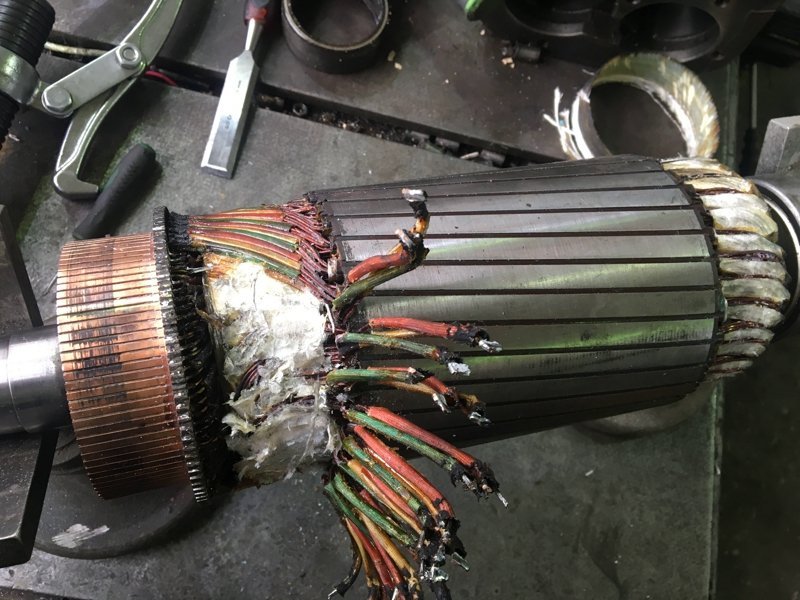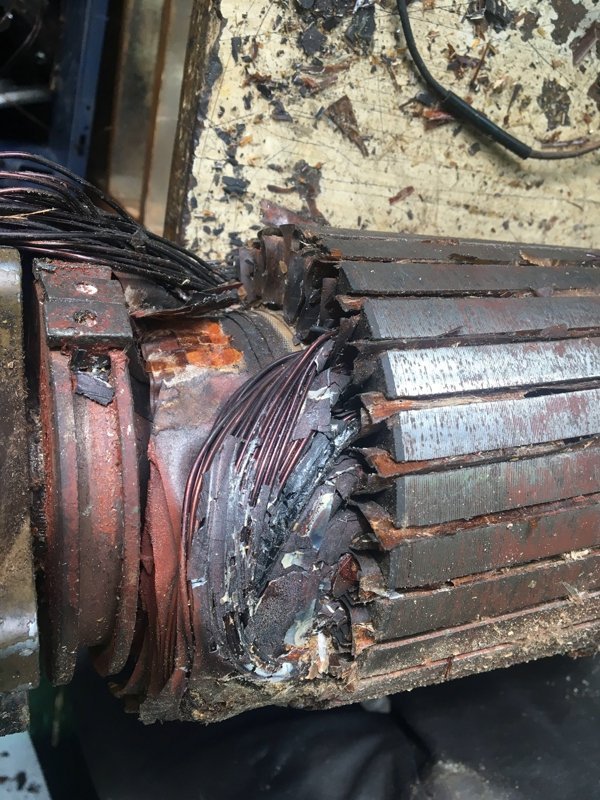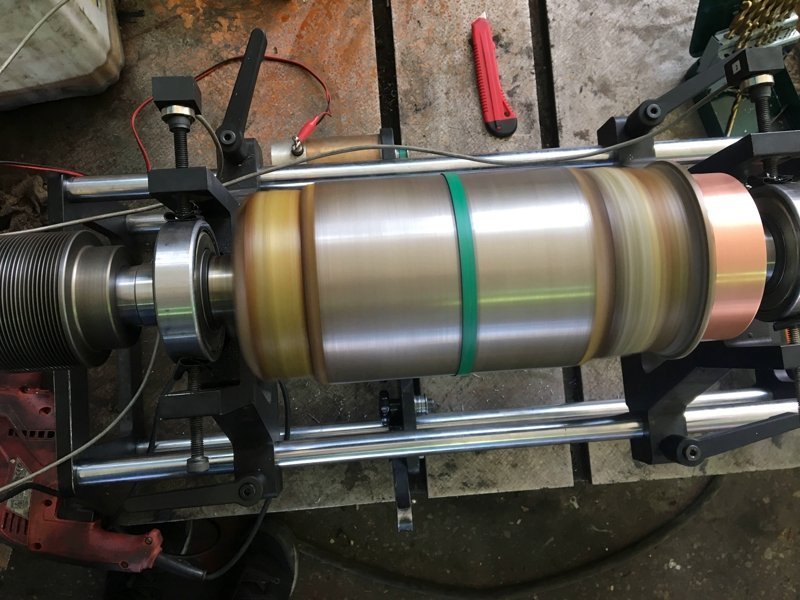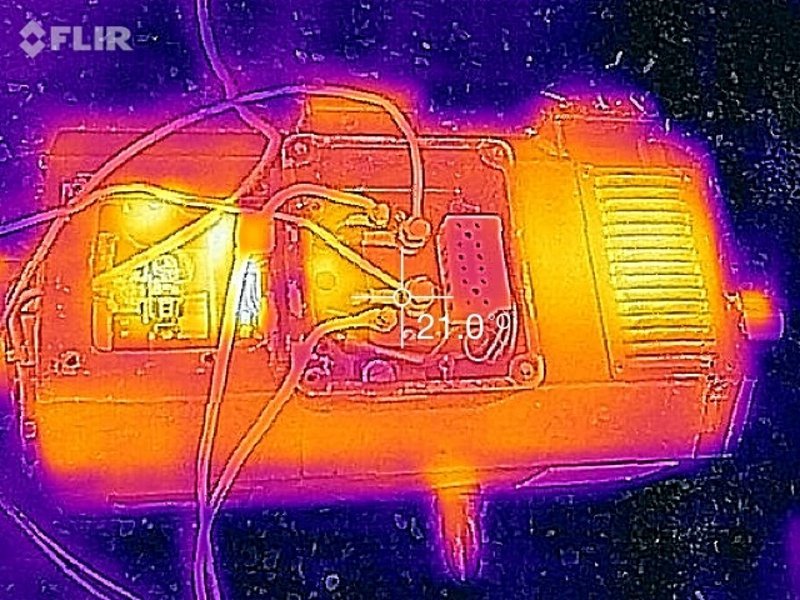

The Siemens motor was exhibiting signs of performance loss and unusual noises, indicating possible internal damage. Initial diagnostics revealed a damaged armature and significant bearing wear.
Repair Process
-
Disassembly and Inspection:
- The motor was carefully disassembled to inspect all internal components.
- The armature showed significant wear and required a complete rewind.
- The bearings were heavily worn and needed replacement.
-
Armature Rewinding and Balancing:
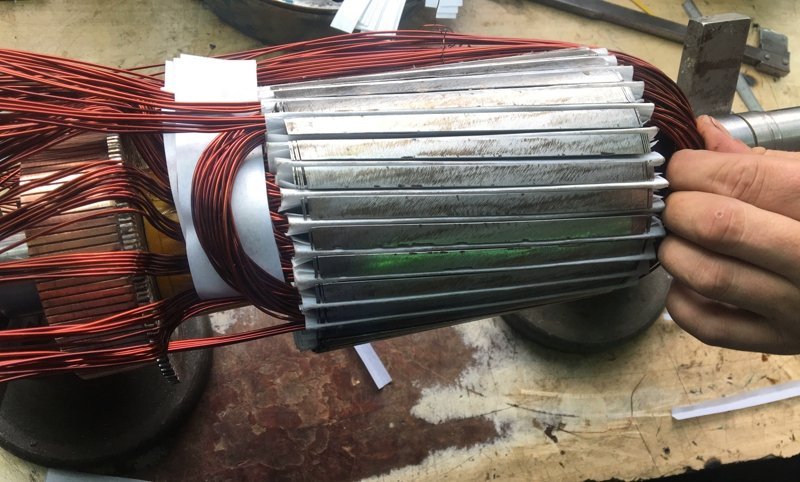
- The damaged armature was fully rewound to restore functionality and electrical performance.
- After rewinding, the armature was precisely balanced to eliminate vibration and prevent future mechanical damage.
-
Replacement of Bearings:
- The worn bearings were replaced with high-quality new bearings to ensure long-term reliability and smooth operation.
-
Comprehensive Testing:
- After completing mechanical repairs, the motor underwent a series of comprehensive tests.
- This included electrical testing to verify proper winding and insulation, as well as mechanical testing to confirm balance and structural integrity.
- The motor was tested under load to ensure it met its rated performance and operated flawlessly.
Result
After completing the repairs and tests, the Siemens DC motor was reassembled and returned to service. The motor operated smoothly and showed improved performance, thanks to the successful rewinding of the armature and replacement of the bearings.
Conclusion
The successful repair of the 40 kW Siemens DC motor highlights the importance of precise diagnostics and high-quality workmanship. Through careful rewinding and balancing of the armature, along with the installation of new bearings, the motor was restored to optimal working condition—ensuring extended service life and reliable performance for the customer.